


![FYY Daily Pill Organizer, 7 Compartments Portable Case for Travel, [Folding Design]Pill Box for Purse Pocket to Hold Vitamins,Cod Liver Oil,Supplements and Medication-White](https://m.media-amazon.com/images/I/51I3jz4MUXL._AC_SL520_.jpg)




Heads up: This planning guide may mention products and booking resources. If you buy or book through some links on WanderOza Travel, we may earn a commission at no extra cost to you. We recommend choices based on practical fit, not hype.
Answer-first: The right travel organizer reduces packing time, protects essentials, and keeps airport/security checks smooth—choose by item category (clothes, tech, documents, toiletries, meds) and by trip length.
A travel organizer is any pouch, cube, or case that groups similar items so you can pack faster and find things instantly. Start by listing what actually needs organizing—clothing layers, cables, travel documents, toiletries, and medications—then pick an organizer type for each category. Keep liquids and batteries compliant, and match cube sizes to your suitcase volume (carry-on vs. checked). Below you’ll find practical examples, checklists, and a quick decision guide.
Start
 ├─ Is this a carry-on-only trip?
 │   ├─ Yes → Use 2–3 packing cubes + clear 3-1-1 liquids bag + slim tech organizer
 │   └─ No  → Add shoe/laundry sacks + hanging toiletry + document wallet
 ├─ Do you carry multiple gadgets/cables?
 │   ├─ Yes → Zippered travel tech organizer with elastic loops + mesh pockets
 │   └─ No  → One zipper pouch for charger + a universal adapter
 ├─ Need fast access to passports/boarding passes?
 │   ├─ Yes → Travel document organizer (zip wallet or pouch with sleeves)
 │   └─ No  → Minimal passport sleeve + phone wallet
 └─ Medicines daily?
     ├─ Yes → Labeled travel pill organizer + original prescriptions
     └─ No  → Mini first-aid sachet
Quick picks by scenario
- Weekend carry-on: 1 medium packing cube (tops), 1 small cube (underwear/socks), flat kit for toiletries (TSA 3-1-1), slim tech pouch, passport sleeve.
- Family holiday: Color-coded packing cubes per person, hanging toiletry bag for shared sinks, shared tech organizer with labeled cables, document wallet for tickets/IDs.
- Business trip: Compression cubes to reduce volume, a structured tech organizer, slim document folio for passport/boarding pass/receipts, wrinkle-control garment folder if needed.
- Adventure/outdoors: Water-resistant packing cubes, roll-top pouch for damp items, tough cable kit, shoe bags, compact first-aid and pill organizer.
- Medication-heavy travel: Morning/evening pill organizer with labels, keep meds in carry-on, include prescriptions and generic names, and pack a backup day set.
Comparison: travel organizer types and when to use them
- Packing cubes (standard): Best for keeping outfits grouped and easy to pull out. Choose cubes with mesh windows to see contents. Tip: one medium cube per outfit category (tops, bottoms, sleepwear).
- Compression cubes: Add a second zipper to squeeze air out; great for bulkier items. Tip: do not over-compress delicate fabrics; compression can deepen creases.
- Clothing organizer for luggage (garment folder): Folds shirts/slacks flat with a stiff panel to reduce wrinkles. Tip: pair one garment folder with two cubes to balance space.
- Travel tech organizer: Structured case with elastic loops, mesh pockets, and a zip closure. Pack cables (USB-C/Lightning), charger, universal travel adapter, and a power bank. Tip: keep lithium batteries in carry-on and check your airline’s watt-hour limits.
- Best travel document organizer: A zip wallet with sleeves for passports, boarding passes, cards, cash, and SIM/eSIM details. Tip: add a pen and spare passport photos; use a thin RFID sleeve if desired.
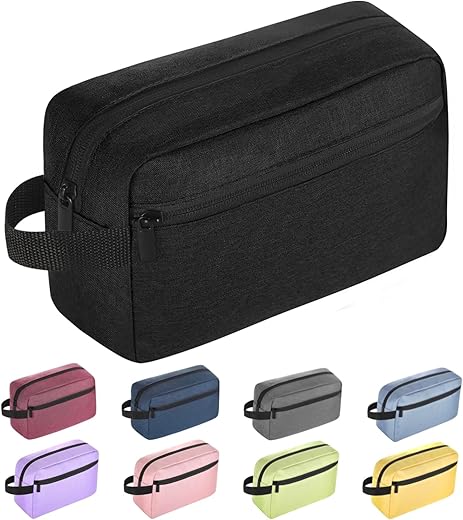
- Toiletry bag & hanging organizer for travel: Hanging styles win in tight bathrooms and cabins. Look for a swivel hook, clear pockets, and wipe-clean lining. Tip: keep your TSA-compliant quart-size liquids bag removable for security.
- Travel pill organizer: Choose lockable lids and clear day labels. Carry original prescription labels and, where appropriate, a doctor’s note. Tip: humidity-control packets help keep tablets dry (follow medication guidance).
- Laundry and shoe bags: Separate worn clothes and protect clean items. Tip: breathable laundry sack + water-resistant shoe bag with a wipeable liner.
How to choose size, layout, and materials
- Suitcase fit: For a typical 35–45 L carry-on, two medium cubes + one small cube + flat liquids bag usually fit one side; jacket/shoes go on the other.
- Cube sizes by use: Small (underwear/socks), medium (3–5 tees or 2–3 shirts), large (sweaters/light jackets). Mix sizes so they fill your suitcase footprint without dead space.
- Materials: Ripstop nylon or polyester for weight savings; mesh panels for breathability; water-resistant lining for toiletries; structured EVA or padded walls for tech.
- Hardware: Smooth zippers with easy pulls; reinforced seams; grab handles for quick removal; interior labels help you repack consistently.
- Security: Keep passports/cards in a zipped pouch; use a tether or clip for document wallets in crowded areas. RFID sleeves are optional; physical zips and mindful carry matter more.
- Compliance: Follow your airline’s liquid rules (e.g., 100 ml/3.4 oz in a 1-quart bag for many routes) and local medicine regulations. Place lithium batteries in carry-on only.
Pack like a system: a 5-step workflow
- Stage: Lay everything out by category (clothes/tech/docs/toiletries/meds).
- Group: Assign an organizer to each category; keep like-with-like.
- Compress: Roll soft items into cubes; use compression cubes for bulk.
- Label: Use colored cubes or tags; note tech cable lengths.
- Place: Heavier cubes near wheels; keep documents/meds reachable.
Clothing organizer for luggage: layout examples
- Carry-on spinner (21 in): 1 medium cube (tops), 1 medium (bottoms), 1 small (undergarments), flat liquids bag, slim tech pouch in the front pocket, document wallet on your person.
- Checked suitcase (25–28 in): 1 large cube (sweaters/bulk), 2 medium cubes (tops/bottoms), garment folder (formal wear), shoe bags, hanging toiletry bag on top for easy unpacking.
Travel tech organizer: what to include
- Charging: 1–2 USB-C cables, 1 Lightning (if needed), multi-port wall charger, universal adapter.
- Power: Airline-compliant power bank; keep it in your cabin bag.
- Data: USB stick or secure cloud access for trip docs; eSIM QR code saved offline.
- Extras: Cable labels, short cable ties, spare earbuds, microfiber cloth.
Best travel document organizer: essentials checklist
- Passports and any required visas or entry permits.
- Itineraries, booking references, and proof of onward travel.
- Travel insurance details and emergency contacts.
- Payment cards, backup cash, and local transit cards where useful.
- eSIM details or SIM tool, and a paper copy of QR codes.
- Vaccination records if required by your destination.
- Spare passport photos and a pen for forms.
Hanging organizer for travel: when it wins
- Small bathrooms, cruise cabins, or shared hostel sinks—hang and access everything at once.
- Look for a rotating hook, clear compartments, and quick-dry fabric.
- For carry-on screening, keep your quart-size liquids bag removable.
Travel pill organizer: pack it safely
- Use a secure, labeled organizer (AM/PM or days of week).
- Keep original prescription labels and, if advisable, a doctor’s note with generic drug names.
- Carry all medications in your cabin bag and check local regulations for controlled substances.
- This guide is informational only—consult a qualified professional for medical questions.
Keep it clean and durable
- Wipe organizers with a damp cloth; air-dry completely before storage.
- Avoid high heat on synthetics; spot-clean lining after liquid spills.
Plan the rest of your trip
Once your packing system is sorted, compare stays and routes to round out the plan: Compare hotels and trip options on Trip.com.