
Planning a trip? Then plan for travel payment fees abroad first. This guide breaks down charges on cards, ATMs, cash, and bookings so you can keep more of your money. It is practical and general. It is not personalized financial advice. To keep it simple, we show steps you can use almost anywhere.
TL;DR: A fast plan to cut overseas payment fees
- Pay in the local currency, not your home currency, when offered a choice.
- Avoid dynamic currency conversion (DCC) on terminals and ATMs.
- Use a card that waives foreign transaction fees when possible.
- Withdraw cash less often in slightly larger amounts to reduce per-withdrawal ATM surcharges.
- Confirm booking totals in the final step. Watch for fees added late, like resort, service, or currency-conversion markups.
- Compare the network exchange rate (Visa/Mastercard) to the merchant’s rate if shown.
In short, choose local currency, say no to conversion screens, and check the final price before you pay. With those quick moves, you cut costs with little effort.
Travel payment fees abroad: what really drives your costs?
There are three forces at work: the exchange rate, your provider’s fees, and merchant or ATM markups. Because they stack, small differences add up fast. Therefore, you need a simple workflow to decide how to pay each time.

Plan trips with fewer booking mistakes
A practical trip snapshot, booking order, hotel comparison, and deal-check workbook.
- Exchange rate. Card networks set rates each day. You can check the live rules and calculators for Visa and Mastercard.
- Provider fees. Many cards add a foreign transaction fee. Banks and ATM owners can add fixed or percentage surcharges. For a clear definition, see the CFPB guide on foreign transaction fees.
- Merchant markups. DCC lets a terminal convert to your home currency at a rate it picks. In many cases, that rate is worse than the network rate. The European Consumer Centres Network explains why paying in local currency is usually cheaper.
As a result, you limit costs by choosing the best rail (card vs ATM vs cash) and by declining optional markups. This approach beats chasing small savings in only one place.
How to cut travel payment fees abroad in three steps
- Decide your primary rail. For most trips, that is a credit or debit card set to pay in local currency. Keep some cash for small buys and tips.
- Control each transaction. At the terminal or ATM, choose the local currency and decline DCC. Review the fee screens before you accept.
- Batch the cash. Also, plan fewer, slightly larger ATM withdrawals to reduce per-transaction surcharges. Store cash safely and split it between two spots.
Follow this three-step loop and you will cut overseas payment fees without extra hassle.
What counts as travel payment fees abroad on cards?
Card costs break into a few buckets. Because each is small, they can be easy to miss. Together, they matter.
| Fee or factor | Where it appears | What to know |
|---|---|---|
| Foreign transaction fee | Your card issuer | Often 1%–3% of the purchase. Some cards waive it. Check your card’s fee schedule. |
| Network exchange rate | Visa/Mastercard | Usually close to interbank. Compare to any merchant-offered rate (DCC). |
| Dynamic currency conversion (DCC) | Merchant terminal | Optional. Often worse than network. Choosing local currency usually reduces cost. |
| Cash advance fee | Card issuer | Triggers if you withdraw cash on a credit card. Also may incur immediate interest. |
Therefore, tap, chip, or swipe in local currency on a card that avoids the foreign fee where you can. In addition, do not use a credit card for cash at ATMs unless it is an emergency.
Which ATMs keep travel payment fees abroad low?
ATM costs come from several places at once. There may be a foreign transaction fee on your bank side, a usage surcharge from the machine owner, and a conversion markup if you accept DCC on the screen. Because of this, you need to control the prompt sequence.
- Find a bank-operated ATM when possible. Airport convenience machines often charge more.
- Decline “conversion to your home currency.” Choose local currency instead.
- Take out what you need for a few days at a time. Fewer withdrawals can mean fewer fixed surcharges.
- Check before you confirm. If an ATM shows a very poor rate or a high fixed fee, cancel and try another machine nearby.
As with cards, the best way to lower fees when paying abroad at ATMs is to refuse optional conversion and minimize per-use charges.
Additionally, look for bank partners listed inside your banking app. Sometimes your bank or card has preferred networks that reduce or refund ATM surcharges; terms vary by bank, so check the latest list before you go. If a screen forces conversion, press “Decline,” “Without conversion,” or similar. If you still cannot skip conversion, cancel and try another ATM. Finally, set sensible daily limits in your app so you can withdraw enough in one go without multiple fees.
Should you pay in local currency to reduce overseas payment fees?
Always check the numbers. However, most of the time, local currency wins. DCC adds a merchant-chosen rate and sometimes an extra fee. The card network rate is usually better. Here is a quick view:
| Choice at checkout | What it means | Typical impact | Best for |
|---|---|---|---|
| Local currency | Transaction clears in the destination currency | Network exchange rate applies; often the cheaper route | Most travelers, most purchases |
| Your home currency (DCC) | Merchant or ATM converts at its chosen rate | Often higher overall cost than network rate | Rare edge cases when shown rate beats network (uncommon) |
To compare, you can check the day’s card-network rate at Visa or Mastercard and match it to the rate on the terminal. If the terminal’s rate looks worse, choose local currency.
For example, say a dinner is 100 EUR. The terminal offers DCC at 1 EUR = 1.12 USD, while the Visa or Mastercard calculator shows about 1.09 USD for today (figures change daily). With DCC, you would pay roughly $112; with local currency, about $109 plus any issuer fees. That $3 difference comes only from the conversion choice. Numbers are illustrative, so always check the live calculator before you confirm.
How exchange rates and fees stack into fees when paying abroad
Because there are many pieces, it helps to see a stack for three common methods: card, ATM, and exchange counter. This is a general snapshot. Your costs depend on your bank and location.
| Method | Rate source | Common fees | Risks | When it fits |
|---|---|---|---|---|
| Debit/credit card (local currency) | Network (Visa/Mastercard) | Foreign transaction fee (if your card charges) | DCC prompts you might accept by mistake | Everyday buys, hotels, transport |
| ATM withdrawal (local currency) | Network (card) + ATM owner | ATM owner fee, bank foreign/withdrawal fees | DCC on the ATM screen; per-use surcharge | Cash needs, tips, small merchants |
| Currency exchange counter | Counter’s posted rate | Spread in rate, often a service fee | Rates vary widely by location and time | Cash on arrival in cash-heavy places |
Therefore, use cards for most spends, and ATMs for cash. Also, avoid DCC everywhere you see it. This mix usually keeps fees when paying abroad in check.
Mini case (rounded numbers): you buy a 50 EUR train pass. Local-currency card route: 50 × 1.09 = $54.50 at the network rate, plus your card’s foreign fee if any. DCC route: terminal shows 50 × 1.13 = $56.50 and may add a small conversion fee. ATM route: if you instead withdraw 50 EUR, you might pay a fixed $3 ATM fee plus your bank’s fee; that can beat or lose to card depending on amounts. As you can see, small changes in rate or fixed fees shift the outcome, so compare once, then stick to the cheaper rail for similar buys.
DCC explained: a major driver of fees when paying abroad
DCC is when a terminal or ATM converts your purchase into your home currency on the spot. It shows a rate and a total in your currency. It may look helpful. However, the rate can be worse than the card-network rate. Also, some terminals add a DCC fee on top. You can and should decline it in most cases. It often inflates travel payment fees abroad. For more background, see the ECC-Net note on DCC.
- If a screen says “Pay 54.00 USD” or “Pay 4,900 JPY,” choose the local currency option.
- If you cannot find the local option, ask the cashier to set local currency.
- At ATMs, scroll past “conversion” and press “continue without conversion” if shown.
How can you spot and avoid booking traps?
Online booking pages can hide costs until late. Because the totals change as you click, take a slow last pass before you pay. Watch for three traps below.
| Trap | Where it shows | What to do |
|---|---|---|
| Resort/service fees added late | Hotels and vacation rentals | Scroll to the tax/fee section. Compare the all-in total across 2–3 sites. |
| Auto currency-conversion toggle | Checkout currency dropdowns | Switch to pay in the property’s local currency. Compare the rate if offered. |
| Cross-border card fees | Some merchants process abroad | Even if prices are in your home currency, your bank may treat it as foreign. Check your statement and card terms. |
Because these charges sit outside the base price, they can inflate your cost by 10% or more. As a result, confirm the final all-in amount and currency before you book.
Before you click pay, also check: the cancellation policy in the same currency as the charge; whether taxes are included on both comparison sites; and if a card surcharge applies in that country (some places allow merchants to add one). Finally, take a screenshot of the last page that shows the total and the currency. This check prevents surprise travel payment fees abroad.
Cards vs ATMs vs cash: minimize overseas payment fees
For most travelers, a card set to local currency is best for day-to-day payments. Also, use ATMs for reasonable cash needs. Keep exchange counters as a backup. Meanwhile, do not use a credit card to get cash unless there is no other option.
- Cards for big and mid-size buys. Hotels, train tickets, tours, and chain restaurants.
- Cash for micro spends. Tips, markets, very small shops, and places with card minimums.
- Keep one backup rail. A second card on a different network can help if a terminal declines the first.
Quick scenarios: in a big city with good contactless coverage, use your card for almost everything and withdraw a small starter amount of cash for tips. In rural areas with spotty card acceptance, withdraw enough cash for two to three days to limit ATM surcharges. On multi-country trips, review your card’s fee policy once per country, then stick to the same pay-in-local rule to avoid drift.
Build a frictionless kit to avoid fees when paying abroad
This is a simple kit that covers most situations without overpacking your wallet.
- One primary credit or debit card you use for most purchases.
- One backup card on a different network (for example, Visa and Mastercard).
- Some starter cash for the first 24 hours (airport transport, quick snacks).
- Bank app access with alerts on, so you can freeze a card fast if needed.
- Offline copies of card numbers and bank contacts kept in a secure note.
Because outages happen, this kit keeps you moving without piling on overseas payment fees.
When are currency exchange counters still useful?
They are a fallback for cash-only spots or off-hours arrivals. However, rates vary a lot by location. Airport counters tend to be worse. Instead, consider a small exchange on arrival if you cannot reach an ATM, then switch to cards and bank ATMs the next morning. Always read the posted rate and any separate service fee before you hand over cash.
Card settings to reduce international card fees
- Enable international use and set travel notifications if your bank requires them.
- Confirm your daily purchase and ATM limits and adjust them if needed.
- Turn on instant transaction alerts. As a result, you can catch DCC or duplicate charges fast.
- Store your bank’s international phone number. Also, add the lost-card line.
These steps do not remove fees when paying abroad. But they help you avoid accidental extra costs from declined payments or repeated attempts.
Small habits to cut overseas payment fees
- Ask for chip-and-PIN when possible. Signatures may allow errors to slip in.
- Review your receipt totals before you tap or insert.
- Keep an eye on contactless limits. Meanwhile, use chip when a terminal misreads your tap.
- Round up small cash buys into one card payment when you can.
Because these habits are small, they stack into real savings on fees when paying abroad.
Are prepaid travel cards worth it for international card fees?
It depends on the fees and your comfort. Some prepaid cards can shield your main account. However, they may add their own load or withdrawal fees. Also, check if they support chip-and-PIN and offline terminals (useful on trains and tolls). Compare the card’s fee table to what you already have. If you cannot find a clear advantage, you may not need a separate product.
Read the “rate math” to avoid fees when paying abroad
- Glance at the two totals. If you see your home currency, that is DCC.
- Find the rate the terminal uses for your home currency total.
- Open the Visa or Mastercard calculator and check today’s card-network rate.
- If the terminal’s rate is worse, pick local currency. Most times, it is.
Because you are comparing live rates, this keeps you from overpaying overseas payment fees by accident.

Common myths about overseas payment fees
- Myth: DCC is safer because it is in my currency. Reality: Safety does not depend on DCC. It is only a conversion choice.
- Myth: The exchange counter always has the best rate. Reality: It depends. Many counters include a wide spread.
- Myth: Cash is king everywhere. Reality: Card acceptance keeps growing. However, carry some cash for edge cases.
How to dispute fees when paying abroad or bad DCC
First, keep your receipt. Then contact the merchant or ATM owner and ask for a reversal if the screen choice or rate was not clear. If that fails, call your bank. Provide the receipt and note that you intended to pay in local currency. While results vary, quick reporting improves your odds. Also, ask your bank to explain any fees so you understand future charges.
Step-by-step: (1) Save evidence: screenshots of the terminal or ATM rate, plus the receipt. (2) Ask the merchant or ATM operator for a correction within a few days. (3) If unresolved, file a dispute with your card issuer; share dates, amounts, and that you selected local currency. (4) Finally, monitor your statement and follow up until you receive a written outcome. Clear records speed this up.
Video walkthrough: avoid fees when paying abroad with card and ATM best practices
If the video does not load, open it here: 8 Tips to Use Revolut Abroad.
Note: Product features change. Always check your provider’s latest fees and limits.
Fast decision map: beat overseas payment fees
Use this light, three-branch map at the counter or ATM:
- Is card accepted? Yes → Pay by card in local currency. No → Go to 2.
- Need cash? Yes → Bank ATM → Decline conversion → Withdraw enough for 2–3 days. No → Find a nearby card-friendly merchant.
- Rate screen appears? Pick local currency. If only home-currency total shows, ask staff to switch the terminal.
How do tipping norms affect your cash plan?
Tipping varies by country and by venue type. Because many tips are small and spontaneous, a little local cash helps. However, many restaurants in big cities allow tips on the card terminal. Ask if you can add it to the card in local currency. This keeps fees simple and avoids extra ATM trips.
How much emergency cash should you carry?
Carry enough for a day if cards fail. For example, plan for transit, a meal, and a night’s stay. Split it into two places (wallet and a safe pocket). Meanwhile, keep your bank app ready so you can respond fast if you need more.
Are mobile wallets helpful abroad?
Often yes. Apple Pay, Google Pay, and bank wallets can work wherever contactless is accepted. They use your underlying card’s network rate and fees. Also, tokenized payments can add security. However, have a physical card ready for places without contactless or for chip-and-PIN prompts.
Can offline terminals cause declines?
Some transport gates, toll booths, and ticket machines use offline authorization. As a result, certain cards or prepaid products may fail. A chip-and-PIN card with offline support can help. If a tap fails, insert your card and try PIN. If it still fails, pay cash or use a staffed counter.
Trip booking tip: test the total on one extra site
Before you book, open one competing site and price the same room or flight to the final step. Because sites add different fees, this quick cross-check helps you avoid silent markups. Confirm the currency you will be charged in. If a site defaults to your home currency, switch it back to the local currency before you pay.
One clean CTA to compare prices
Affiliate disclosure: Some links in this travel guide may be affiliate links. If you book or buy through them, WanderOza Travel may earn a commission at no extra cost to you.
Compare real-time hotel and trip options, filter by price and ratings, and see the final total before you book: Check prices on Trip.com.
Photo checklist: what to keep on your phone
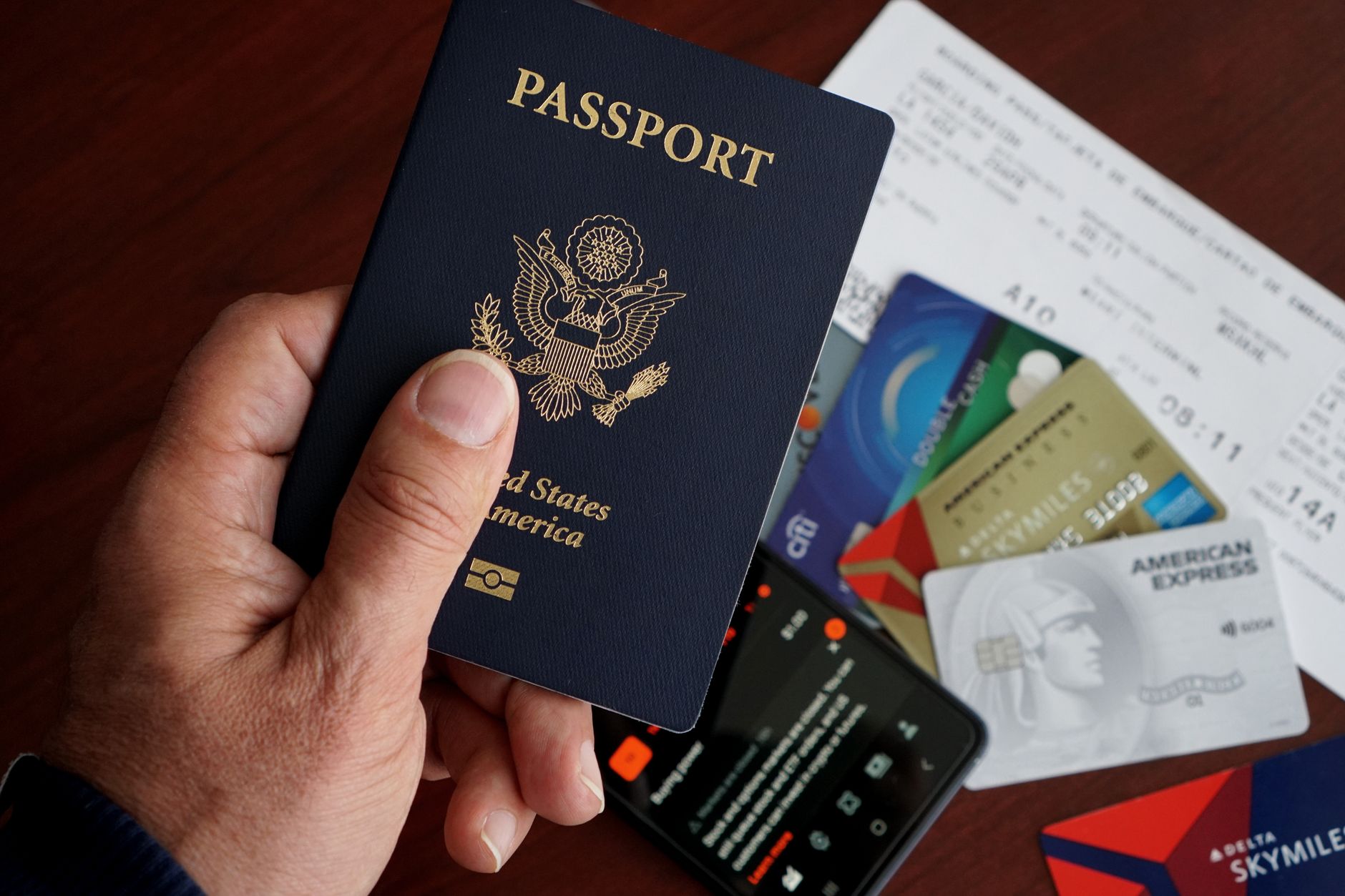
- Images of passport ID page and visas stored in a secure folder.
- Front and back of cards (mask the CVV in your copy).
- Bank emergency numbers and travel support pages.
- A simple note: “Always choose local currency; decline conversion.”
Country differences: what changes and what does not
What changes: acceptance, common card networks, and contactless norms. What does not: the math of fees and markups. Therefore, the same rules work almost anywhere. Pay in local currency. Decline DCC. Use a card that suits travel if you have one. Withdraw cash at bank ATMs. Review totals before you confirm.
Keep records to contest fees when paying abroad
- Keep digital receipts or photos of key buys like hotels and tours.
- Save ATM fee screens if they show a surcharge.
- Download monthly statements and tag any odd charges right away.
These steps help if you need to dispute a charge or report a card issue later.
FAQ: Your questions on travel payment fees abroad
How many travel payment fees abroad are normal on a card?
Many cards charge 1%–3% per purchase as a foreign transaction fee. Some charge none. In addition, you may face DCC at terminals, which often costs more overall. Check your card’s terms and always choose local currency to control extras.
Should I use a debit or credit card for most buys?
Use the card you are most comfortable with and that fits your protections. Many travelers choose credit for hotels and deposits, and debit for day-to-day. However, avoid cash advances on a credit card because fees and interest can start right away.
Is it safe to decline DCC?
Yes. DCC is optional. Paying in local currency is standard and usually cheaper. Keep your receipt and compare rates if needed.
What if the cashier cannot switch the currency?
Ask for a new attempt or a different terminal. If they cannot change it, you can choose cash or accept and note the rate for a possible dispute later.
How much cash should I withdraw each time?
Enough for several days to reduce per-withdrawal fees, while staying safe. Do not carry more cash than you can secure.
Do mobile wallets add new fees?
They typically pass through your card’s own fees and rates. They can add security and convenience where contactless rules. Have a physical card as a backup.
Wrap-up: a calm way to beat extra costs
Focus on the few choices that matter: local currency over DCC, cards for most spends, bank ATMs for cash, and one last check on booking totals. Because you apply them over and over, these moves reduce travel payment fees abroad without stress.