
Lost and delayed baggage is one of the few travel problems with a clear legal framework behind it, and almost nobody uses it. Most passengers report the bag, accept whatever the airline offers, and never learn that the deadlines are short, the evidence requirements are specific, and the compensation is capped rather than fixed.
This lost and delayed baggage guide covers what to do at the airport, the written notice deadlines that decide whether a claim survives, what you can actually claim for, and where the limits sit. Doing the first twenty minutes properly matters more than anything you do afterwards.
Last reviewed and updated: October 8, 2026. How this guide was researched: this lost and delayed baggage guide is desk research, not a claims service. Deadlines and the liability limit are taken from an official French government consumer page summarising the Montreal Convention, cited at the end. One blog claimed a revised higher limit that we could not confirm at an official source, so it is not used here. Rules differ by route and carrier, so check your own ticket.

Free download: WanderOza Travel Planning Kit
Compare flights, stays, tours, eSIMs, transfers, and deal rules before you book.
What to do before you leave the airport
Most lost and delayed baggage outcomes are decided here, and it has to happen before you walk out of the terminal.
- Report it at the airline desk in the arrivals hall. If there is no desk, contact the airline as soon as possible by whatever route they publish.
- Get a reference. Most airlines issue a Property Irregularity Report with a file number. Without it you are starting from nothing later.
- Check the details on the report before you accept it: your address, your contact number, the bag description and the flight.
- Photograph everything. The report, your bag tag, the carousel, and any damage.
- Keep your boarding pass and bag tag receipt. These are the documents a claim is built on.
- Ask what the airline provides immediately for essentials, and ask for it in writing.
Do not leave the airport without a reference number on the assumption you will sort it out online. Filing after you have gone home is harder, slower, and in some cases out of time.

Lost and delayed baggage: the deadlines that matter
Written notice is the hinge of the whole system, and the windows are shorter than people assume.
Under the Montreal Convention, you must submit a written protest to the carrier within 7 days of receipt for damaged baggage, and within 21 days of the bag being made available for delayed baggage.
If your ticket falls under the older Warsaw Convention instead, the windows are tighter still: 3 days for damage and 14 days for delay. Which convention applies is shown on your ticket, and you can ask the airline if it is not clear.
| Situation | Montreal Convention | Warsaw Convention |
|---|---|---|
| Damaged baggage | Written notice within 7 days of receipt | Within 3 days of receipt |
| Delayed baggage | Written notice within 21 days of availability | Within 14 days of availability |
| Missing on arrival | Report immediately at the airline counter, or as soon as possible | |
| Liability cap | Around 1,288 Special Drawing Rights per passenger under the Montreal Convention | |
Note the wording carefully. The clock for damage runs from receipt of the bag, not from the flight, and the clock for delay runs from when the bag was made available. Both are written-notice deadlines, so a phone call is not enough. Send an email and keep it.
How much can you actually get?
On lost and delayed baggage payouts, expectations and reality part company sharply.
The Montreal Convention sets a liability limit of approximately 1,288 Special Drawing Rights per passenger, which the French government consumer service puts at roughly 1,525 euros. The SDR is an international reserve asset whose value moves with exchange rates, so the equivalent in your currency shifts.
Three things about that number are routinely misunderstood:
- It is a ceiling, not a payment. If your proven loss is below the limit, you can claim only the amount of the damage.
- It is per passenger, not per bag. A family travelling together has a limit each, which is worth knowing when one shared suitcase is lost.
- Proof is required. Compensation reimburses demonstrated financial loss, so a delay that cost you nothing pays nothing.
There is one way to raise the ceiling, and it must be done in advance: a special declaration of interest at check-in, usually for a fee. If you are carrying something genuinely valuable in the hold, that is the mechanism. In practice, the better answer is usually not to put it in the hold at all.
SDR limits are reviewed periodically, and at least one source claims a recent increase that we could not confirm against an official publication. Before relying on a specific figure for a live claim, check the current limit with your airline or an official aviation authority rather than a claims website.
What you can claim for while a bag is delayed
Among lost and delayed baggage claims, delay is the most common and the most winnable, because the costs are concrete.
If the delay forced essential purchases, you can request a refund from the airline with invoices. Typical examples are toiletries, underwear and basic clothing, plus anything specific to your trip that you genuinely could not do without.
Keep it defensible:
- Buy what you need, not what you fancy. Reasonableness is the test, and an expensive replacement wardrobe invites a reduced settlement.
- Keep every receipt, itemised rather than a card slip.
- Buy progressively. Two days of essentials looks different from a single large purchase on day one.
- Note what you had to miss if the delay cost you something beyond purchases, such as equipment for an activity you had already paid for.
Some airlines offer a flat daily allowance. You can accept it, but it does not usually extinguish your right to claim proven costs above it, so read what you are signing before agreeing to a figure at the desk.
When a delayed bag becomes a lost one
There is no single moment defined for everyone, which causes a lot of confusion.
In practice, airlines run their own tracing processes. They declare a bag lost after a period that varies by carrier, commonly between a few days and a few weeks. Once that happens the claim changes character. You are no longer claiming interim expenses, but the value of the contents and the bag itself, within the liability limit.
That shift is why an inventory matters. Without a record of what was inside, you negotiate from memory against a carrier with a process. A photograph of the open packed bag takes ten seconds and transforms the claim.
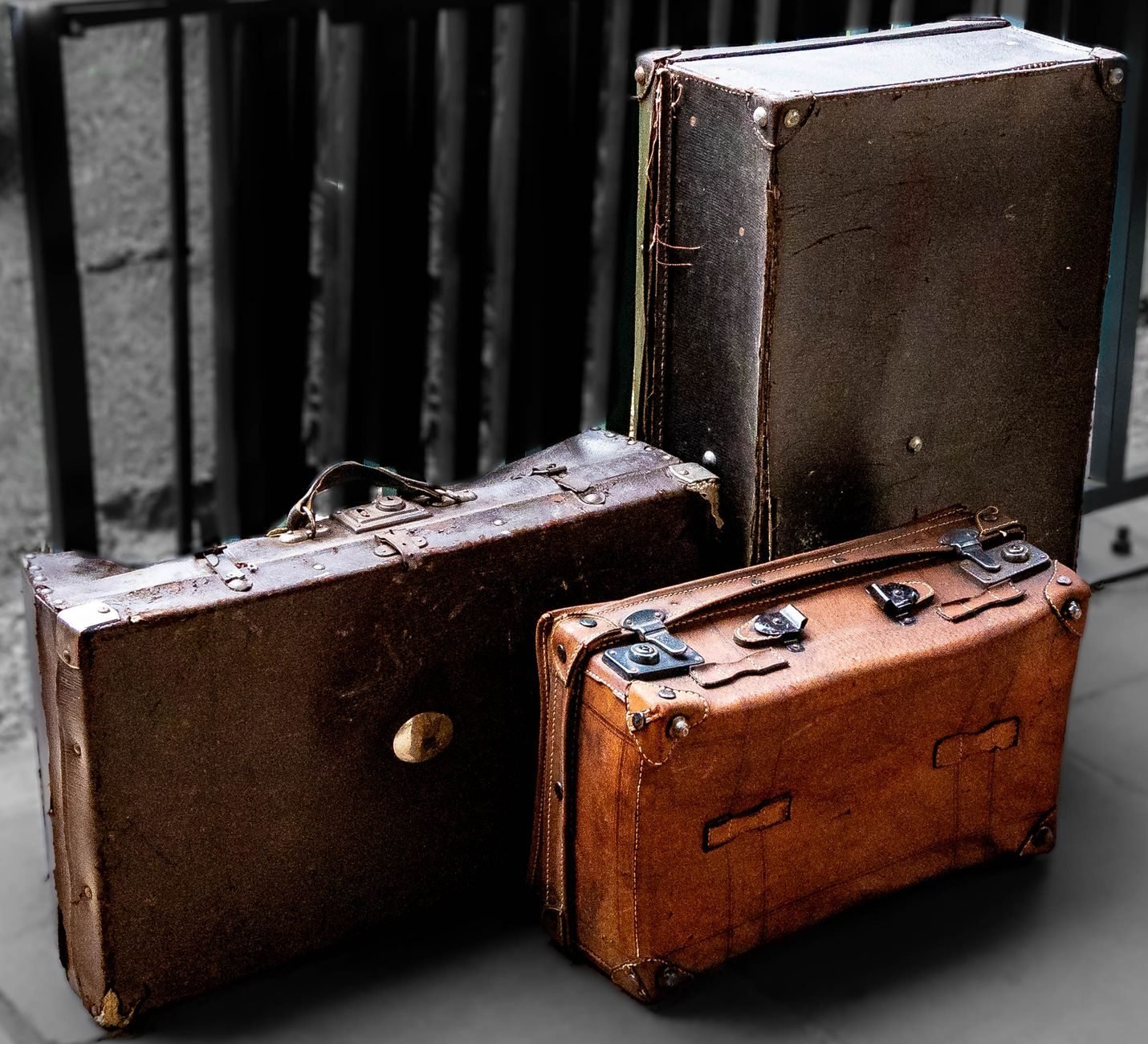
Damaged baggage, which people under-claim
Damage is the lost and delayed baggage category passengers most often shrug off, partly because the deadline passes while they are still on holiday.
Report damage before leaving the airport if you notice it there, and submit written notice within 7 days of receiving the bag under the Montreal Convention. Photograph the damage next to the bag tag so the link between bag and flight is evident.
Expect pushback on categories airlines commonly exclude. These include minor scuffs, wheels and handles on wear-and-tear grounds, and fragile contents packed in the hold. Those exclusions are not always applied correctly, so a documented challenge is often worth making.
Insurance, credit cards and where they fit
Airline liability is the floor rather than the whole picture, and the other sources of cover work differently.
Travel insurance frequently covers delayed and lost baggage, with its own limits, deadlines and per-item caps. It will usually expect you to claim from the airline first. Credit card cover, where it exists, often depends on having paid for the flight with that card, and may be secondary to other policies.
Two practical points. First, do not duplicate: you cannot be paid twice for the same loss, and insurers coordinate. Second, check per-item limits before you travel, because a single expensive item is frequently capped far below the overall policy limit.
Our guides to travel insurance, the travel insurance claim guide and credit card travel cover versus insurance cover how these interact.
Reducing the risk before you fly
Most lost and delayed baggage problems are survivable; the aim is to make them inconvenient rather than ruinous.
- Carry the irreplaceable. Medication, documents, valuables, electronics and anything required on day one go in the cabin.
- Photograph the packed bag open, then closed with the tag attached.
- Put contact details inside as well as outside, since external tags come off.
- Avoid tight connections. Most mishandled bags are missed connections rather than lost luggage, and a longer layover genuinely reduces the risk.
- Use a tracker if you have one. Being able to tell an agent where the bag is changes the conversation.
- Remove old tags, which cause genuine misrouting.
- Pack a day of essentials in the cabin, which converts a delay from a crisis into a nuisance.
If you are connecting, our guide to layover planning covers how much buffer actually protects a bag, and avoiding airline baggage fees covers the cost side.
Codeshares, connections and which airline you claim from
This is the question that stalls more claims than any other, and the answer is less obvious than it looks.
On an itinerary with more than one carrier, the airline that sold the ticket and the airline that flew the leg may be different companies. Under the Montreal Convention framework, both the contracting carrier and the actual carrier can generally be pursued. In practice that means a choice rather than a dead end.
Start with whoever operated the final leg into your destination. That is the carrier whose desk you are standing at, and whose system holds the tracing file. If they push you toward the other airline, do not simply accept the handover. Ask them to record the claim and give you the reference, then pursue both in writing.
Separate tickets are a worse situation. If you booked two tickets rather than one through itinerary, you collected and re-checked the bag yourself. The first airline’s responsibility usually ended when it handed the bag over. That is one more reason a single through booking is worth more than it looks at the point of sale.
What the airline will and will not tell you
Airline staff at a baggage desk are generally trying to help, but they are working to a script that is not written for your benefit.
What you will usually be told: the tracing reference, an expected timeframe, and whatever the carrier’s standard immediate allowance is. What you will usually not be told, unless you ask directly:
- That the liability cap is a ceiling requiring proof, not a payment you will receive automatically.
- That a written notice deadline applies, and that it runs from receipt or availability rather than from the flight.
- That you can claim proven costs above a flat daily allowance in many cases.
- That a special declaration of interest existed as an option at check-in, which is of no use now but matters next time.
- Which convention applies to your particular ticket, which changes your deadlines.
None of this is deception. It is a desk under pressure handling the common case. But the questions are yours to ask. Asking them politely at the counter is far easier than reconstructing the position weeks later.
Keeping records that survive a dispute
A lost and delayed baggage claim is won on documentation, and the documentation is easy to assemble in advance.
Before the trip, photograph the packed bag open and then closed with the tag attached. Keep receipts or at least model details for anything genuinely valuable inside, because replacement value is contested far more often than the fact of the loss.
During the problem, keep everything in one place. That means the irregularity report, the bag tag stub, the boarding pass, every purchase receipt, and a short dated note of each conversation. A folder in your phone is enough.
Afterwards, send the claim as one clear message. Put the reference number in the subject line, itemise the costs, and attach the receipts. Claims that arrive piecemeal get handled piecemeal, and drift past the point where anybody owns them.
If the airline refuses or goes quiet
A refused lost and delayed baggage claim is not the end of the process, and the escalation routes are more accessible than people expect.
Start by putting the claim in writing with your reference number, the deadline you met, itemised costs and copies of receipts. Be specific about what you are claiming and under which convention, because a claim that cites the framework is treated differently from a complaint.
If the airline refuses compensation or does not respond within two months, consumer escalation routes exist. In France, for example, the official guidance points travellers to the Mediator Tourism Travel, and for European companies to the European Consumer Centre. Other countries have equivalent bodies, and your own national aviation authority is the place to start.
Claims companies will handle this for a share of the award. That can be worth it for a complex case, but for a documented delay claim with receipts, writing the email yourself is usually straightforward and keeps the whole settlement.
A simple lost and delayed baggage timeline
- At the airport: report, get the reference, photograph everything.
- Day one: buy only essentials, keep itemised receipts.
- Within 7 days: written notice for any damage.
- Within 21 days: written notice for delay under the Montreal Convention.
- On the bag’s return: submit costs with receipts and the reference number.
- If declared lost: submit an inventory with evidence of value.
- After two months of silence: escalate to the relevant consumer or aviation body.
Frequently asked questions
How long do I have to report damaged baggage?
Very little time, and the clock runs from when you receive the bag rather than from the flight. The Montreal and Warsaw Conventions set different windows, and which one applies is shown on your ticket. See the deadline table above for both, and send written notice rather than relying on a phone call.
How long do I have to claim for delayed baggage?
Longer than for damage, but still short, and it runs from when the bag was made available to you. The two conventions set different windows, both listed in the table above. A phone call is not written notice, so send an email and keep a copy with your reference number.
How much compensation can I get for lost luggage?
Less automatically than most people expect. The Montreal Convention sets a per-passenger ceiling expressed in Special Drawing Rights, not a fixed payment, and the figure is given in the section above with its source. If your proven damage is below the limit you can claim only the amount of the damage, because compensation reimburses evidenced loss rather than inconvenience.
Is the limit per bag or per passenger?
Per passenger. That matters for families sharing suitcases, because each traveller has their own limit even where one bag held everyone’s belongings. You can raise the ceiling by making a special declaration of interest at check-in, usually for a fee.
What can I buy while my bag is delayed?
Essential purchases such as toiletries and basic clothing, refundable on production of invoices. Keep it reasonable and itemised, buy progressively rather than all at once, and retain every receipt. A delay that cost you nothing pays nothing, because the system reimburses proven loss.
What if the airline ignores my claim?
Put everything in writing with your reference number, the deadline you met and itemised receipts. If the airline refuses or has not responded within two months, escalate to the relevant consumer body or your national aviation authority. Official guidance points European travellers to bodies such as the European Consumer Centre.
Sources and further reading
- Service-Public.fr, official French government guidance on baggage deadlines and the Montreal Convention limit
- ICAO, for the current Montreal Convention limits of liability
- US Department of Transportation, aviation consumer protection for flights to and from the United States
This guide is educational and not legal advice. Which convention applies, what your airline’s conditions of carriage say, and what national rules add all vary by route, so check the terms on your own ticket and seek advice for a disputed claim.