
The quick answer on overweight baggage fees
Overweight baggage fees are charged when a checked bag exceeds the weight limit for your fare. They are among the most expensive charges in air travel per kilogram, and they are almost entirely avoidable with a luggage scale and ten minutes of attention.
- The limit is per bag, not per passenger. Two bags at the limit cost less than one bag over it.
- The charge steps up sharply. Bands are typically narrow, and crossing into the next one costs far more than the weight suggests.
- It stacks on top of the checked bag fee. You pay to check the bag, then pay again because it is heavy.
- The airport scale is the only one that counts. Your bathroom scale is an estimate, not a defence.
- Limits differ by airline, cabin and route. A limit that applied outbound may not apply on the return.
Consequently the strategy is simple. Weigh at home, know your airline’s exact limit for your specific ticket, and leave a margin. Everything else in this guide is detail around those three things.
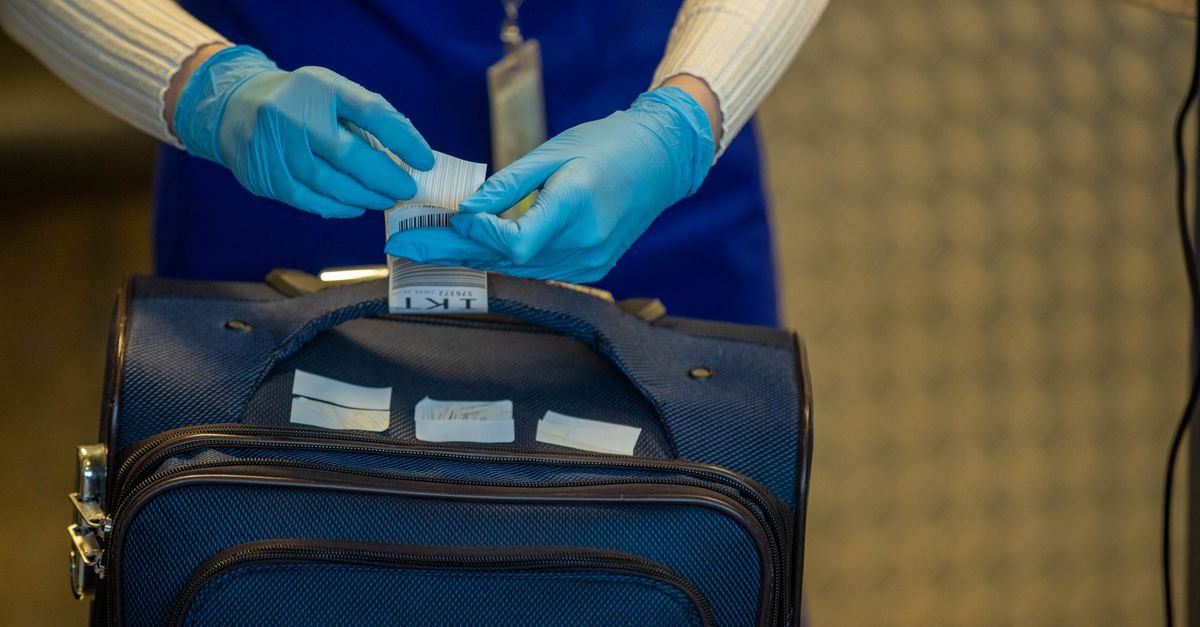
Why overweight baggage fees are structured the way they are
Weight matters to an airline for two unrelated reasons, and understanding both explains why the charges look punitive.

Free download: WanderOza Travel Planning Kit
Compare flights, stays, tours, eSIMs, transfers, and deal rules before you book.
The first is fuel. Aircraft burn fuel in proportion to mass, so every additional kilogram carried across a route has a real cost. That cost, however, is small per bag. It does not explain the size of the charge.
The second is handling and safety. Baggage handlers lift bags repeatedly in confined spaces, and workplace safety rules in many countries cap what a single person may lift unaided. Above a certain weight a bag needs two handlers or mechanical assistance, which slows the operation. Airlines therefore price heavy bags to discourage them rather than to recover fuel.
That is why the charge is a step rather than a slope. You are not paying for extra kilograms. You are paying a penalty for moving the bag into a category that costs the airline more to handle, which is also why a bag slightly over the limit attracts the full charge.
How the charges stack
The table sets out the charges that can apply to one checked bag. They are cumulative, which is the part people underestimate.
| Charge | What triggers it | Avoidable? | Best time to act |
|---|---|---|---|
| Checked bag fee | Checking any bag on most fares | Sometimes, with status or a card | At booking, where it is cheapest |
| Overweight fee | Bag above the weight limit | Yes, by redistributing or removing items | At home, on a luggage scale |
| Oversize fee | Bag above the linear size limit | Yes, by choosing a smaller case | When buying luggage |
| Excess bag fee | More bags than the fare allows | Sometimes, by consolidating | At booking |
| Gate bag fee | Carry-on that does not fit the allowance | Yes, by adding the bag earlier | At booking, never at the gate |
| Special item fee | Sports or musical equipment | Rarely | At booking, after reading the policy |
A framework for avoiding overweight baggage fees
Four steps. The first two cost nothing and prevent nearly every charge.
Know the limit that applies to your ticket
There is no single industry weight limit, and assuming otherwise is how most overweight baggage fees are incurred. The figure depends on the airline, the cabin, the route and sometimes the fare within that cabin.
Long-haul tickets frequently carry a different allowance from short-haul ones on the same airline. Premium cabins usually allow more. Codeshare itineraries are the real trap: the allowance can be set by the operating carrier for each segment, so a bag that was acceptable on the outbound flight may be over the limit on the return leg flown by a partner.
Therefore check the baggage allowance shown on your booking confirmation for each flight, rather than the airline’s general baggage page. Where two carriers are involved, check both. Our guide to avoiding airline baggage fees covers the order in which to add bags so you never pay gate prices.
Weighing at home properly
A hanging luggage scale is inexpensive and pays for itself the first time it prevents a charge. Nevertheless, how you use it matters.
Weigh the packed bag, not the contents. Weigh it on a hard floor rather than carpet if you are using a platform scale, because carpet absorbs load and reads low. Check the scale against something of known weight occasionally, since cheap scales drift. And weigh again after you pack the last few items, because those are the ones added in a hurry.
Most importantly, leave a margin. Airport scales are calibrated for commercial use and are frequently less generous than domestic ones. A margin of a kilogram or two absorbs both the difference between scales and whatever you acquire at your destination.
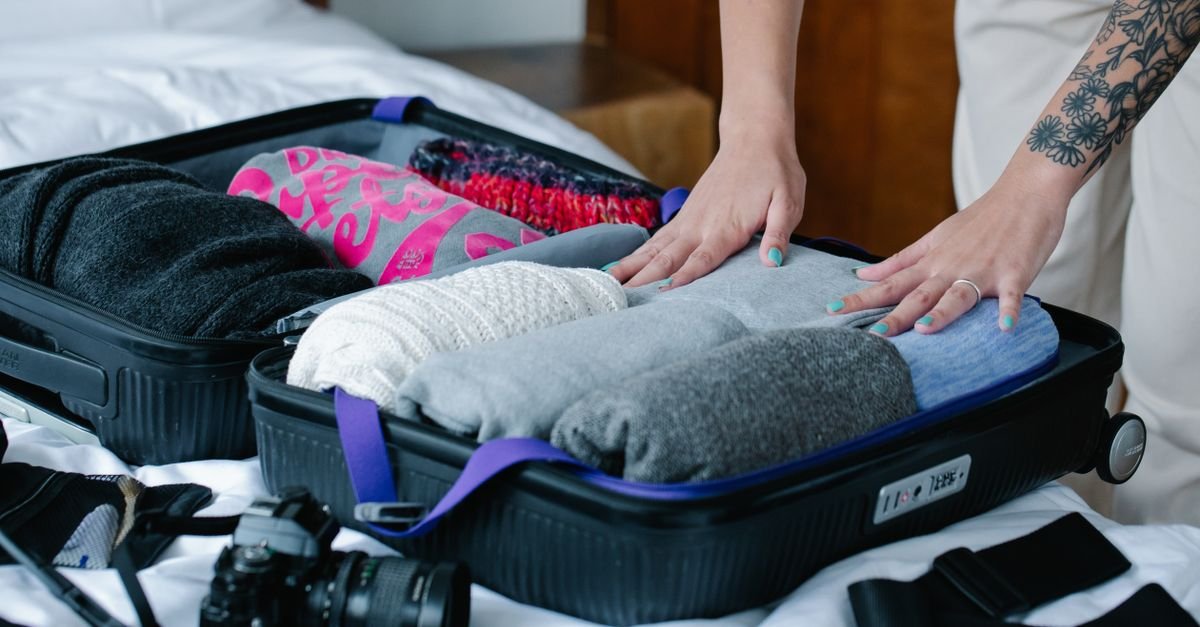
Redistributing weight instead of paying
Because the limit applies per bag, moving weight is almost always cheaper than paying for it. Several options exist, in rough order of value.
Move dense items to your carry-on. Books, chargers, cables, toiletries and shoes are heavy for their volume. A carry-on is rarely weighed on domestic US flights, although it may be on some international and low-cost carriers, so this is route-dependent rather than universal.
Wear the heaviest clothing. A coat and boots worn rather than packed can shift a surprising amount, and outerwear is not counted.
Split across two checked bags if your fare allows a second one. Two bags inside the limit frequently cost less in total than one bag over it, especially where the overweight band is steep.
Consolidate across travellers. If you are flying with someone whose bag is light, moving items between bags costs nothing. Airlines price per bag, not per family.
Finally, consider shipping. For a genuinely heavy load, particularly one that is not time-critical, a courier is sometimes cheaper than excess baggage and avoids handling it at all. Compare before assuming the airline is the only option.
At the airport, if the bag is over
Most airports have scales in the check-in hall before the desks. Use them. Discovering the problem there costs nothing, whereas discovering it at the desk means the agent has already recorded the weight.
If you are over at the desk, ask politely whether moving items would bring you under. Agents frequently allow a small overage at their discretion, and almost always allow you to repack. What they cannot usually do is waive a charge once it has been applied in the system.
Keep an empty foldable bag in your luggage for exactly this situation. It weighs almost nothing, and it converts a repack from a scene on the floor into a tidy redistribution.
Low-cost carriers price weight differently
Budget airlines deserve separate treatment, because their entire commercial model rests on charges that full-service carriers bundle. Weight is one of the main levers.
Three differences matter. Firstly, the included allowance is often smaller, and sometimes there is no free checked allowance at all. Secondly, the bands are narrower, so a bag drifts into the next charge sooner. Thirdly, and most importantly, the price of adding weight rises steeply the later you do it: adding an allowance online during booking is cheapest, adding it later through the app costs more, and adding it at the airport costs the most by a wide margin.
Many budget carriers also weigh cabin bags and enforce the limit at the gate, which removes the usual tactic of moving dense items into hand luggage. Our guide to carry-on size limits covers how strictly those are applied. Where that is the case, the only real options are to buy the correct allowance in advance or to pack less.
The practical rule is to decide your baggage needs honestly at the point of booking rather than optimistically. A fare that looks cheap before bags frequently is not cheap after them, and the comparison that matters is the total including the allowance you will actually need.
Buying luggage with weight in mind
The empty weight of the case itself is a cost most people never consider, and it is paid on every single trip.
Large hard-shell cases can weigh several kilograms before anything goes in, which is a meaningful share of a typical allowance. Soft cases are usually lighter, though less protective. Spinner wheels, telescopic handles and expansion zips all add weight, and an expansion zip in particular encourages packing past the limit.
Therefore, when buying, check the stated empty weight alongside the dimensions, and treat a lighter case as a recurring saving rather than a one-off preference. If you routinely fly carriers with a modest allowance, the empty weight of your luggage is one of the few variables you can fix permanently.
Where status and cards help
Our comparison of basic economy and main cabin covers which fares include what. Elite status with an airline usually increases the number of bags you may check free, and sometimes the weight allowance too. Airline credit cards commonly include a free checked bag for the cardholder and companions, which addresses the bag fee rather than the weight.
Be careful about the distinction. A card that waives the checked bag fee does not normally waive an overweight charge. The weight limit is a handling rule, not a pricing tier, so it usually applies regardless of status.
Sports equipment and special items
Skis, golf clubs, bicycles and musical instruments are handled under separate policies that often have their own weight limits and their own fees. Sometimes those policies are more generous than standard baggage, and sometimes considerably less.
Because the rules are item-specific, read the airline’s special items page before you travel and before you buy a case. A bicycle in an oversized hard case can attract both an oversize and an overweight charge simultaneously, which is the most expensive outcome available.
A checklist before you leave for the airport
- What is the exact weight limit for each flight on your ticket?
- Who operates each segment, and does their allowance differ?
- Have you weighed every checked bag at home?
- Is there a margin of a kilogram or two?
- Are the densest items in your carry-on rather than the checked bag?
- Do you have a foldable spare bag for redistribution?
- If you expect to buy things, have you left capacity for the return?
Mistakes that cost the most
Assuming the return leg has the same allowance as the outbound. Weighing on carpet. Packing to exactly the limit with no margin. Paying the overweight charge rather than moving items between bags. Discovering the problem at the desk instead of at the scales in the hall. Buying a large hard case that is heavy before anything goes in it. Each of these is avoidable, and together they account for most overweight baggage fees travellers actually pay.
Frequently asked questions about overweight baggage fees
How much are overweight baggage fees?
They vary by airline, route and how far over the limit you are, and the bands step up sharply. Because the amounts are revised regularly, check your airline’s current baggage page for the figure that applies to your ticket rather than relying on a remembered number.
Is it cheaper to pay for a second bag or an overweight fee?
Usually a second bag, where your fare permits one. The weight limit applies per bag, so two bags inside the limit often cost less in total than one bag over it.
Do airlines weigh carry-on bags?
On most domestic US flights, rarely. Some international carriers and many low-cost airlines do weigh cabin bags and enforce the limit. Treat it as route-dependent and check before relying on moving weight into your carry-on.
Can I avoid the fee by wearing heavy clothes?
Partly, yes. Clothing worn rather than packed is not counted, so a coat and boots can shift a meaningful amount. It helps at the margin rather than solving a bag that is substantially over.
Does elite status waive overweight baggage fees?
Not usually. Status and airline cards commonly waive or reduce checked bag fees, but the weight limit is a handling and safety rule, so overweight charges generally still apply.
Can the check-in agent remove the charge?
They can often allow a small overage at their discretion before it is entered, and they will almost always let you repack. Once the charge is applied in the system it is much harder to remove, which is why the scales in the check-in hall matter.
Planning the baggage side of a trip
Affiliate disclosure: Some links in this guide are affiliate links. If you book through them, WanderOza Travel may earn a commission at no extra cost to you, and it does not change what we recommend.
Baggage rules are set by the operating carrier, so the allowance is part of what you are choosing when you choose a flight rather than an afterthought. Compare flights and carriers on Aviasales, then check the baggage allowance on the airline’s own page before you book.
Baggage that is delayed or damaged is a separate risk from baggage that is heavy, and airline liability for it is capped. Compare baggage and delay cover with EKTA if what you are carrying would be expensive to replace.
How this guide was researched and an important note
This guide is based on the published baggage policies and conditions of carriage of major airlines, on the way weight allowances are set per operating carrier on codeshare itineraries, and on US Department of Transportation consumer guidance covering baggage.
We have deliberately not quoted specific weight limits or fee amounts. Those differ by airline, cabin, route and fare, they are revised frequently, and a figure remembered from a guide is the most likely thing to be wrong by the time you read it. The allowance for your ticket is shown on your booking confirmation, and the current charges are on the airline’s own baggage page.
We research and compare booking mechanics rather than reviewing individual carriers. For official US guidance on baggage rules and airline liability, see the US Department of Transportation aviation consumer protection pages, and for general consumer guidance on charges and disclosure see the FTC consumer advice site.
Last updated .