
The quick answer on flight delay compensation
When a flight is delayed or cancelled, two separate things may be owed to you, and most passengers claim neither. Because flight delay compensation depends on which rules apply to your specific flight, the first question is not how long you waited but where you were flying from and on whom.
The two things are care and compensation. Care means food, drink and a hotel while you wait, and it is owed far more readily than cash.
- Which rules apply depends on the departure country, the destination and the airline’s home country.
- Care obligations, such as meals and accommodation, start long before any cash entitlement does.
- Cash compensation generally depends on the delay being within the airline’s control.
- Rerouting or a refund is usually your choice when a flight is cancelled, not the airline’s.
- You must usually claim; airlines rarely pay automatically, and third-party firms take a cut.
Affiliate disclosure: Some links in this guide are affiliate links. If you book through them, WanderOza Travel may earn a commission at no extra cost to you, and it does not change what we recommend.

Free download: WanderOza Travel Planning Kit
Compare flights, stays, tours, eSIMs, transfers, and deal rules before you book.
Get the delay reason in writing at the airport, keep every receipt, and claim directly first. Consequently you preserve both entitlements rather than losing them at the gate.
This is general information, not legal advice. Rules differ by jurisdiction and change, so check the current official guidance for your route before relying on anything here.
Which flight delay compensation rules apply to you
This is the flight delay compensation question that determines everything else, and the one most guides skip.
Passenger rights regimes are territorial rather than universal. Therefore the same airline can owe you a great deal on one route and very little on another.
Broadly, the European regime is the strongest and most widely known, and it generally covers flights departing from within the area regardless of airline, plus flights arriving there on airlines based there. Consequently a flight into Europe on a non-European carrier may not be covered while the reverse is.
The United Kingdom retained a closely equivalent regime after leaving the European Union, so UK departures are similarly protected. Meanwhile the detail has begun to diverge, so checking both is sensible.
The United States takes a different approach, with strong rules on refunds and on being denied boarding, and historically no general entitlement to cash for delay alone. So American and European expectations are genuinely different rather than one being a weaker version of the other.
Several other countries, including Canada, Brazil and Turkey, have their own regimes with their own thresholds. Consequently the only reliable method is to check the rules for your actual route.
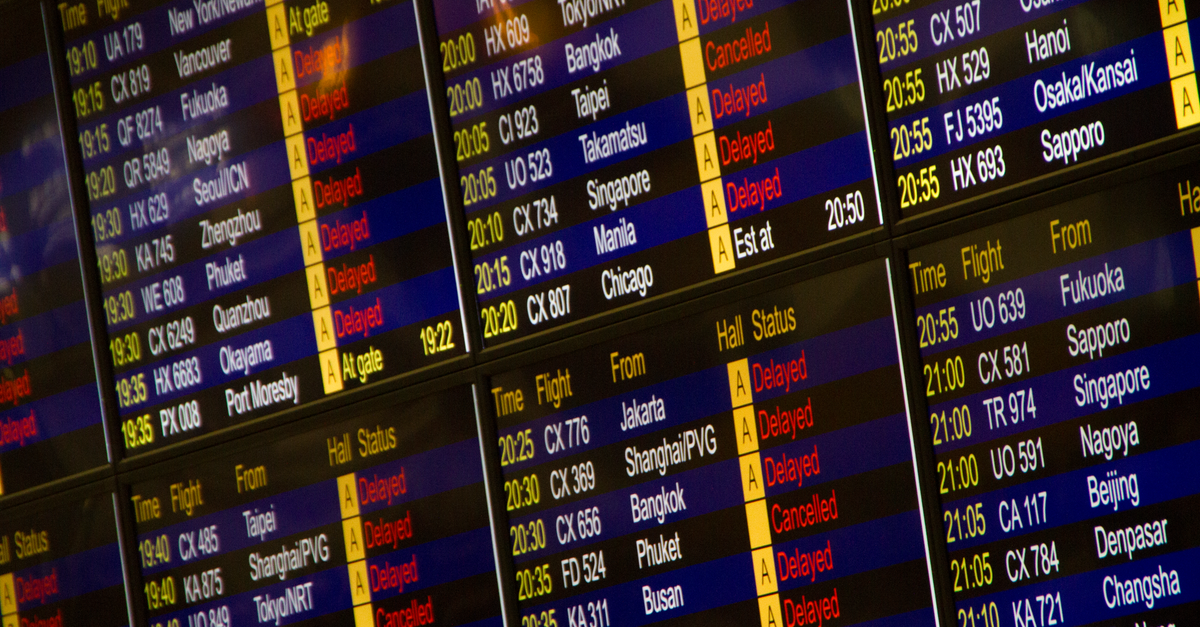
Comparing flight delay compensation and what else you are owed
The table separates the entitlements, which are frequently confused with each other.
| Entitlement | What it is | Usually owed when | How to get it |
|---|---|---|---|
| Care and assistance | Meals, drinks, phone access, hotel, transfers | Delay beyond a set period, regardless of cause | Ask at the desk; keep receipts if you pay |
| Rerouting | A seat on another flight to your destination | Cancellation or long delay | Ask explicitly, including other airlines |
| Refund | Money back for the unused journey | Cancellation, or a delay you decline to travel on | Choose it instead of rerouting |
| Cash compensation | A fixed sum for the disruption | Long delay or cancellation within airline control | Written claim to the airline |
| Denied boarding payment | Compensation for being bumped | Involuntarily denied boarding on an oversold flight | Do not volunteer; ask for the written offer |
| Expenses beyond the rules | Costs you incurred because of the disruption | Varies; often via insurance instead | Insurance or card claim with receipts |
A framework for claiming flight delay compensation
Five steps, starting at the airport rather than at home, protect your position.
Care and assistance: the part you can get today
This is the most useful and least claimed entitlement, and it applies regardless of why the flight is late.
Where a delay passes a defined length, airlines under several regimes must provide refreshments appropriate to the wait, and accommodation plus transfers if an overnight stay results. Therefore the obligation exists even when the cause is weather.
In practice airlines often issue vouchers, and at busy times they run out or nobody offers them. Consequently asking at the desk explicitly is necessary rather than optional.
If nothing is provided, pay for something reasonable yourself and keep the receipts. Meanwhile reasonable means a meal and a standard hotel, not a celebratory dinner, and claims for the latter get refused.
Photograph the departure board, your boarding pass and any notice given. So you have evidence of the delay length independent of the airline’s record.
These costs are generally recoverable separately from any compensation. Consequently claiming both is correct rather than greedy.
When flight delay compensation is and is not owed
The distinction that decides most claims is whether the cause was within the airline’s control.
Technical faults with the aircraft are generally treated as within the airline’s control, because maintenance is its responsibility. Therefore mechanical delays commonly do attract compensation under the European regime.
Severe weather, air traffic control restrictions, airport closures, security incidents and strikes by third parties are generally treated as outside its control. Consequently these usually remove the cash entitlement while leaving care intact.
Airline staff strikes are more contested, and case law has generally been less favourable to airlines than they would like. Meanwhile this is exactly the area where a refusal is worth challenging.
Knock-on delays from an earlier disruption to the same aircraft are also contested, and airlines frequently cite them. So a refusal on that basis is not necessarily the end of the matter.
Because the stated reason matters so much, obtaining it in writing at the time is the single most valuable thing you can do. Consequently a vague verbal explanation is worth pressing on.
Cancellations: reroute or refund is your choice
Passengers routinely accept whatever the airline offers, when the flight delay compensation choice generally belongs to them.
On a cancellation you can usually choose between a refund and being rerouted to your destination at the earliest opportunity. Therefore stating which you want, clearly and early, matters.
Rerouting can include other airlines under several regimes, which airlines seldom volunteer. Consequently asking specifically whether they will book you on a competitor is worth doing.
Accepting a voucher instead of a cash refund often waives rights, and in several jurisdictions you cannot be required to take one. Meanwhile the voucher is almost always worse than the cash.
If you choose a refund and then buy your own replacement flight, you generally cannot also claim the replacement’s cost from the airline. So decide which route you are taking before you book anything.
Where the cancellation is notified well in advance, cash compensation is typically reduced or removed. Consequently the notice period is a factor in what you can claim.
Denied boarding and overbooking
Being bumped is treated differently from flight delay compensation, and usually more favourably.
Airlines oversell flights, and when more passengers arrive than there are seats they first ask for volunteers. Therefore the initial offer is a negotiation rather than a rule.
If you volunteer, what you receive is whatever you agree, and your statutory entitlements generally fall away. Consequently volunteering cheaply is a poor trade unless the offer is genuinely good.
If you are denied boarding involuntarily, statutory compensation generally applies and is often substantial, in addition to rerouting. Meanwhile US rules in particular are relatively generous here.
Ask for the offer and the reason in writing, and ask what your entitlement would be if you decline to volunteer. So you can compare the two before agreeing.
Arriving early and checking in promptly reduces the chance of being selected. Consequently the practical defence is logistical.
Making the flight delay compensation claim properly
How you claim affects whether you are paid, more than most people expect.
Claim directly with the airline first, in writing, through its own complaints channel. Therefore you avoid paying a percentage to an intermediary for something you could have done yourself.
State the flight number, date, booking reference, the delay length on arrival, the reason you were given, and the regime you believe applies. Consequently the claim is specific rather than a complaint.
Attach the boarding pass, booking confirmation and any receipts. Meanwhile a photograph of the departure board helps where the airline’s record is disputed.
Be factual and brief. So a short claim citing the rules is handled faster than a long account of how the day felt.
Note the time limits, which vary by jurisdiction and can be long but are not indefinite. Consequently claiming promptly is safer than waiting.
If the airline refuses
A first refusal of flight delay compensation is common and is not the end of the process.
Ask for the refusal in writing with the specific reason, which creates something to challenge. Therefore the paper trail builds.
Most jurisdictions have a national enforcement body or an aviation ombudsman that handles passenger complaints at no cost. Consequently escalating there is free and frequently effective.
Alternative dispute resolution schemes exist in several countries and bind the airline to the outcome. Meanwhile the airline must usually tell you which scheme covers it.
Small claims procedures are a further option and are designed to be usable without a lawyer. So the route exists if the regulator does not resolve it.
Claims firms will handle it for a percentage, which is reasonable value only if you would otherwise not claim at all. Consequently use them last rather than first.
Insurance, cards and what they add
Flight delay compensation and insurance cover different things, and both can apply to the same event.
Statutory rights cover the airline’s obligations to you. Therefore they do not cover the hotel night you lost at the other end or the missed tour.
Travel insurance delay cover typically pays for meals and accommodation after a defined wait, and trip interruption cover may handle unused arrangements. Consequently it fills exactly the gap the airline rules leave.
Several premium credit cards include travel delay and baggage delay cover, often requiring the trip to have been paid for with that card. Meanwhile the limits are usually modest and the terms change, so check your current benefits guide.
You generally cannot be paid twice for the same loss, and insurers will ask what the airline provided. So claim in the right order: airline first, then insurance for what remains.
Keep one set of documents that serves both claims. Consequently the receipts, boarding pass and written delay reason do double duty.
Reducing the chance of disruption
Prevention is less interesting than compensation and considerably more valuable.
Book the earliest flight of the day where you can, because delays accumulate through the day as aircraft fall behind. Therefore a morning departure is statistically the safest.
Avoid the last flight of the day on a route you must complete, since there is no later option if it fails. Consequently a mid-afternoon flight with an evening fallback is safer than an evening flight with none.
Book connections on a single ticket rather than separate tickets, because a single ticket makes the airline responsible for the connection. Meanwhile separate tickets leave you with no claim when the first flight is late.
Allow generous connection times, particularly where you change terminals or clear immigration. So the published minimum connection time is a legal minimum rather than a comfortable one.
Avoid checking a bag where the itinerary is tight, since baggage transfer is a common cause of missed connections being made worse. Consequently hand luggage preserves your options.
What to do in the first hour of a delay
The first hour is when the useful seats on other flights are still available.
Check the airline’s app immediately, since rebooking often opens there before the desk acknowledges it. Therefore you may rebook yourself while others queue.
If the app offers nothing, phone the airline while standing in the queue, because the phone queue and the desk queue are separate. Consequently you double your chances.
Look up alternative flights yourself before speaking to an agent, so you can ask for a specific seat on a specific service. Meanwhile a specific request is far more likely to succeed than an open one.
Ask for the delay reason and care provision at the same conversation. So one interaction covers both entitlements.
If an overnight stay looks likely, book a refundable hotel room early and cancel it if the airline provides one. Consequently you are not competing for the last room at midnight.
Common flight delay compensation misconceptions
Several widely held beliefs about flight delay compensation cost passengers money.
The belief that compensation depends only on the delay length is wrong, because the cause matters at least as much. Therefore a very long weather delay may attract care and no cash.
The belief that budget airlines are exempt is wrong, since the regimes apply by route and departure point rather than by fare paid. Consequently a cheap ticket carries the same statutory rights.
The belief that accepting a voucher is harmless is wrong, because it can waive a cash entitlement worth considerably more. Meanwhile airlines offer vouchers precisely for that reason.
The belief that you must use a claims firm is wrong, since direct claims and free regulator escalation are available. So the percentage is avoidable.
The belief that nothing can be done once you have left the airport is wrong, although it is much harder without the written delay reason. Consequently gathering evidence at the time is what makes the later claim easy.
A checklist to keep on your phone
First, at the airport ask for the reason for the delay in writing and photograph the departure board.
Second, ask for care: refreshments for a long wait, and accommodation plus transfers for an overnight, keeping receipts if you pay yourself.
Third, on a cancellation state clearly whether you want rerouting, including on another airline, or a refund rather than a voucher.
Fourth, claim directly with the airline in writing, citing the flight details, the arrival delay, the stated reason and the applicable regime.
Fifth, if refused, get that in writing and escalate free of charge to the national enforcement body or ombudsman.
Finally, claim insurance or card cover for anything the airline rules do not cover, and check the current official guidance for your route before relying on any of this.
Mistakes that cost passengers their claim
- Leaving the airport without the reason for the delay in writing.
- Accepting a voucher that waives a larger cash entitlement.
- Volunteering to be bumped for a small offer without asking what involuntary denial would pay.
- Assuming a long delay automatically means compensation, regardless of cause.
- Booking connections on separate tickets and losing any claim when the first leg is late.
- Paying a claims firm a percentage before trying a free direct claim.
- Giving up after the airline’s first refusal instead of escalating to the regulator.
- Failing to keep receipts for meals and a hotel paid for out of pocket.
Frequently asked questions about flight delay compensation
Does a long delay always mean compensation?
No. The cause matters at least as much as the length. Delays within the airline’s control, such as technical faults with the aircraft, generally attract cash compensation under regimes that provide it, while severe weather, air traffic restrictions and security incidents generally do not. Care such as meals and a hotel is owed regardless of cause.
Which rules apply to my flight?
It depends on the departure country, the destination and where the airline is based, not on what you paid. The European and UK regimes are the most generous and broadly cover departures from those areas plus some arrivals on their own carriers. The United States focuses on refunds and denied boarding. Several other countries have their own regimes.
Should I accept a voucher?
Usually not. Accepting a voucher can waive a cash entitlement worth considerably more, and in several jurisdictions you cannot be required to take one instead of a refund. Ask what your cash entitlement would be before agreeing to anything.
Do I need a claims company?
No. Claim directly with the airline in writing first, and escalate free of charge to the national enforcement body or aviation ombudsman if refused. Claims firms take a percentage, which only makes sense if you would otherwise not claim at all.
What if I am bumped from an oversold flight?
If you volunteer, you get whatever you agree and your statutory entitlements generally fall away, so ask what involuntary denial of boarding would pay before accepting. Involuntary denied boarding usually carries substantial statutory compensation in addition to rerouting.
Does travel insurance cover the same things?
No, it covers different things and both can apply. Statutory rights cover the airline’s obligations to you, while insurance delay and trip interruption cover handles losses at the other end, such as an unused hotel night. Claim from the airline first, then insurance for what remains, since you cannot be paid twice for the same loss.
Covering the gap the airline rules leave
Statutory rights cover the airline obligations to you, and insurance covers the hotel night and the missed arrangements at the other end. Compare travel insurance delay and interruption cover with EKTA
Booking the earliest departure of the day on a single ticket is the cheapest protection against the disruption described above. Compare flights and booking windows on Aviasales
How this guide was researched and an important note
This guide is structured around the distinction that decides most claims: the separation between care and assistance, which is generally owed regardless of the cause of a delay, and cash compensation, which generally depends on the cause being within the airline’s control. It also sets out that passenger rights regimes are territorial, so what applies depends on the route rather than the fare.
No delay thresholds, compensation amounts, distance bands, notice periods or claim time limits appear here. That is deliberate: these differ between jurisdictions, are revised, and are exactly the figures that passengers misremember and airlines rely on them misremembering. The guide directs readers to the official source for their route instead.
This is general information, not legal advice. Rules differ by jurisdiction and change, case law continues to develop on contested points such as staff strikes and knock-on delays, and nothing here should be relied on for a specific claim. Check the current official guidance for your route, and consider free regulator or ombudsman escalation before any paid service.
Useful official references: European Commission air passenger rights, US Department of Transportation aviation consumer protection, UK Civil Aviation Authority passenger information, and Canadian Transportation Agency air passenger protection highlights.
Related reading on this site: layover planning tips, airline booking traps and travel booking mistakes.
Last updated .